What makes a photograph, a photograph

“You didn’t create that. That’s AI!”
“Do I even need to purchase art anymore?”
Most of the conversation around AI and fine art photography is sloppy.
Everything online gets questioned about whether it is real or AI. People ask whether AI images are good enough. Whether they look photographic. Whether the difference matters as long as the final image is strong.
But I think the real question is simpler: what still makes a photograph a photograph?
For me, the answer is not film. It is not grain. It is not black-and-white. It is not whether the image came out of a darkroom or a digital camera.
It is about how it makes the viewer think and how it makes them feel. It is the contact that it makes with the world.
A photograph begins with light from something that existed
Photography has always involved interpretation. Exposure matters. Lens choice matters. Development matters. Printing matters. Cropping matters. Darkroom work matters. Post-processing matters. None of that is new.
What makes the medium distinct is that the image begins with light reflected or emitted from something in front of the camera. A person. A landscape. A surface. A moment. However stylized the final print becomes, there is a physical event at the beginning of it.
That event is the anchor.
If light from a real scene passes through a lens and is recorded on film or by a sensor, it is still photography. You can push the image hard afterward. Print it dark. Crop it tight. Process it aggressively. The foundation is still a capture.
That distinction matters in contemporary fine art photography because the medium is no longer only competing with other photographs. It is competing with convincing synthetic images that borrow the look of photography without the underlying encounter.
Film and digital are different tools, not different species
This is where the conversation usually gets stupid.
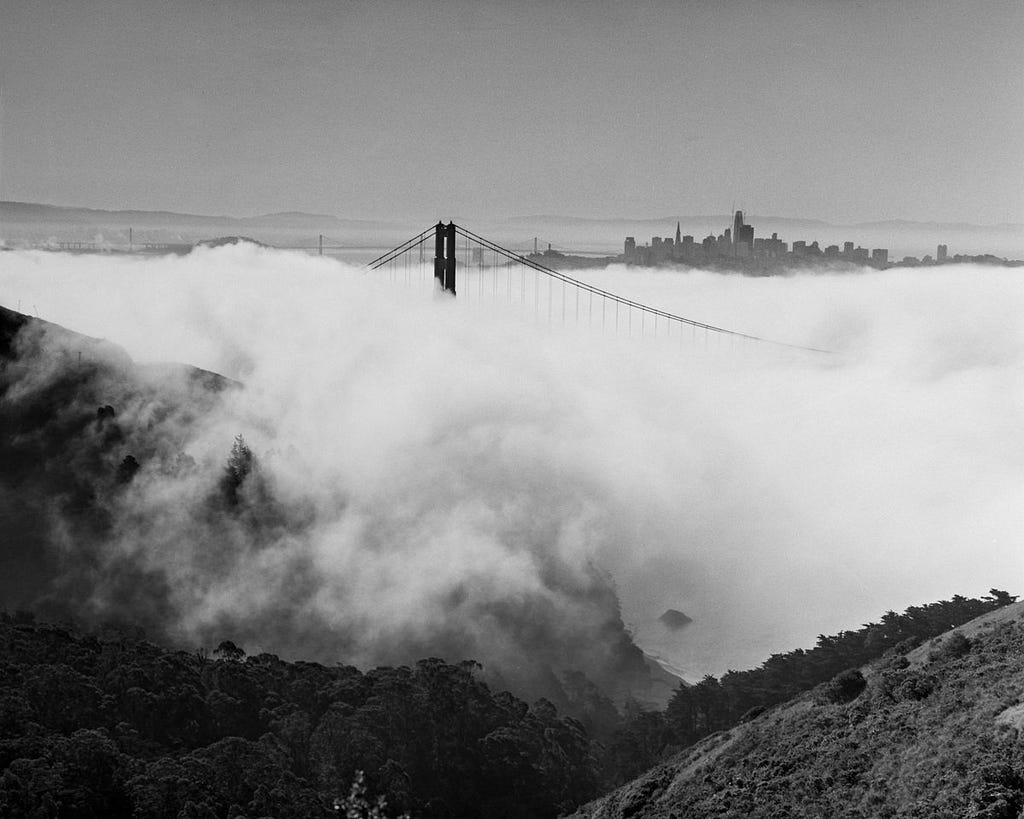
I shoot both film and digital. Some of my work is made on large format (4x5, 8x10) film. Some of it is made with a digital camera. They do not render the world the same way. They do not feel the same to work with. They do not produce the same kind of print.
But both are photographic.
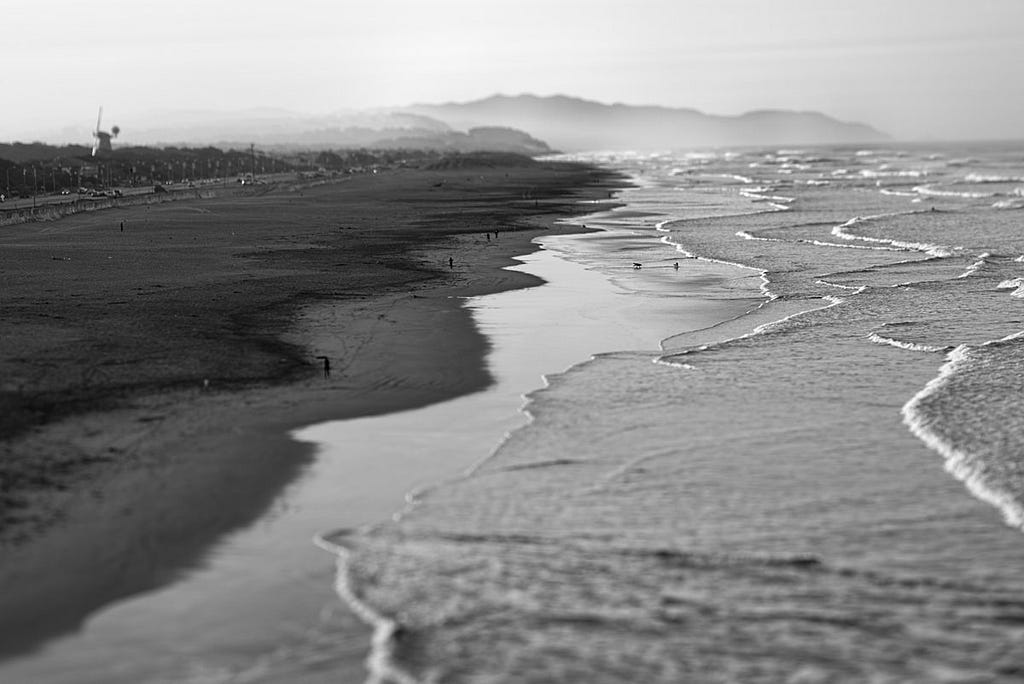
The medium is not defined by nostalgia. It is not defined by chemistry alone. A digital capture is still a trace of reality. It is still light from a real scene, recorded at a specific moment under specific conditions.
That is why the film versus digital argument has never interested me much. It is a technical argument pretending to be a philosophical one.
The more important distinction now is between images that are captured and images that are generated. For me, that is the real fault line in photography now, including fine art photography.
Why AI-generated images change the category
An AI-generated image can absolutely be interesting. It can be beautiful. It can be persuasive. It can imitate the visual language of photography well enough that many people will not know the difference at first glance.
However, imitation is not the issue.
The issue is that the image does not begin with an encounter between light and the world. It begins with a model synthesizing a plausible arrangement of visual information from training data, statistical relationships, and prompts.
That is not a technical footnote. It is the whole distinction.
A generated image may resemble a photograph. It may borrow the authority of photography. It may exploit the viewer’s assumption that a camera was once present. But if no lens was pointed, no light was recorded, no moment was witnessed, then the image belongs to a different category.
Call it image-making. Call it synthetic imagery. Call it machine-generated visual work. But calling it photography blurs a distinction that still matters.
This is not an argument for purity
Photography has never been pure. Photographers dodge and burn. They retouch. They composite. They remove distractions. They alter contrast, color, and structure. Every serious photographer makes choices that shape the image beyond what the eye saw.
“You don’t take a photograph, you make it.” — Ansel Adams
The point is not that untouched files are honest and everything else is false. That has never been true.
The point is that a photograph still carries a relationship to the world, even when it is interpreted. Not in the legal sense. In the literal one. Something was there. Light touched it. The camera received that light. The image is built on that event.
Once that chain is broken, we are no longer arguing about degrees of manipulation inside photography. We are arguing about whether the medium has changed.
It has.
Why this matters more now, not less
Some people assume this distinction will matter less as generated images get better. I think the opposite.
The more convincing synthetic images become, the more valuable actual photographic contact with the world becomes.
That does not mean every photograph needs to look documentary. Mine rarely do. My infrared photography already shifts tonal relationships into something most people experience as strange or unreal. But the strangeness comes from what light was doing, not from a machine fabricating a scene that never existed.
That difference is not abstract. It changes how the work is made. It changes how it is printed. It changes what a collector is actually living with on the wall.
When a print comes from a real exposure, it carries time in a specific way. A place existed. The light was like that once. The camera was there. The print is a physical continuation of that encounter.
I do not think that becomes obsolete because software can produce something visually impressive. I think it becomes more important.

What survives in photography
Now, I am not against AI, even though this article may make it seem otherwise. In fact, I find it an incredibly useful tool to come up with concepts or convey an idea when I am working with a client or collaborator.
However, what survives is the part of photography that made it matter in the first place.
The camera is still one of the few tools we have for making images through actual contact with the world. Film does that. Digital does that. Infrared does that. Large-format does that. A small mirrorless camera does that. Heck, even your iphone. (Sorry, I am an android guy though.)
AI does something else.
That does not make one morally pure and the other corrupt. But they are not the same thing, and pretending otherwise does not help.
If we lose that distinction, we lose the core of the medium.
Not realism. Not objectivity.
Contact.
Kofi Amoa is a Northern California fine art photographer working in film and digital.