A room doesn't need more color. Most rooms have plenty. What they lack is stillness.
I've watched it happen dozens of times now. Someone hangs one of my prints and the entire space recalibrates. The photograph gives everything else permission to breathe.
That's what a black and white photograph does. It doesn't compete with your furniture, your paint, your textiles. It holds a different register entirely. And that register tends to quiet everything around it.
The room was already talking
Most interiors are noisy in the visual sense. Competing textures, layered colors, objects pulling your eye in six directions. It's the nature of a lived-in space, and there's nothing wrong with it.
But when you introduce a monochrome photograph into that environment, something shifts. The image becomes a resting point. A place where the eye lands and stops scanning.
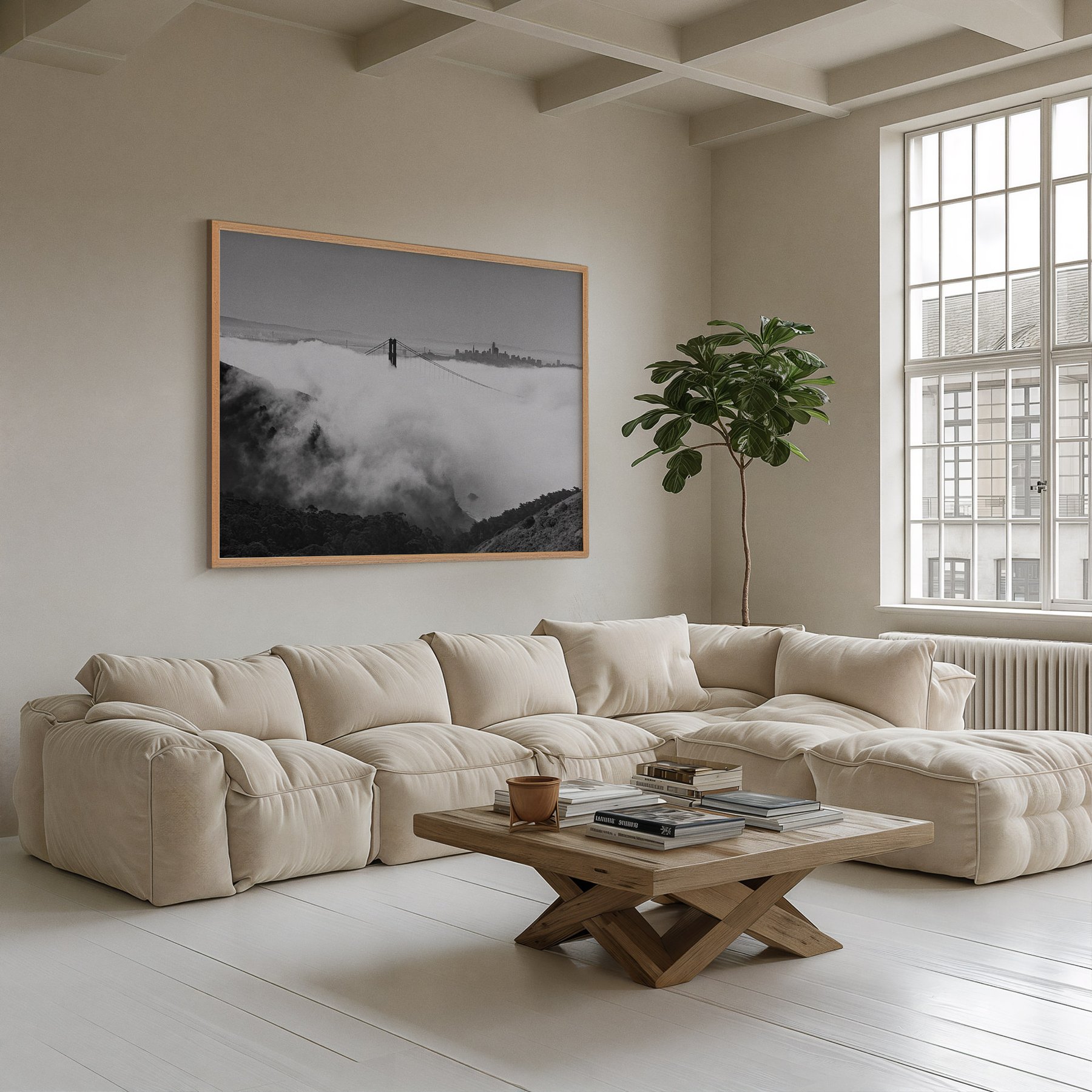
That's why my Scapes series resonates the way it does in residential spaces. An image like The Foggy Bridge, the Golden Gate disappearing into fog, the city behind it barely a suggestion, doesn't need a bold palette to earn its place on a wall. The fog does the work. The tonal range carries the weight.
Why monochrome holds up over time
Color photographs are tied to their era. The saturation, the processing, the palette, they date themselves. That works for documentation. It becomes a problem for a piece you want to live with for twenty years.
Black and white sidesteps that entirely. A silver gelatin print from the 1940s and a contemporary archival pigment print share the same visual language. They belong to the same conversation. That's not a small thing when you're choosing art for a space you intend to inhabit long-term.

My prints are made on archival cotton rag paper with pigment inks rated for over a century of color permanence under normal display conditions. The visual longevity matters as much as the material longevity. A well-made black and white print won't clash with the room you redesign around it five years from now. It adapts. It persists.
This is something I hear from collectors regularly. They change their walls, their furniture, sometimes their entire home. The photographs stay.
A photograph changes how a wall feels
Decoration matches what's already there. Art introduces something the room didn't have before.
A black and white photograph brings depth without weight. Emotion without distraction. When I shoot on 4x5 large format film, the negative captures a density of tonal information that no current digital sensor can match at the sizes I print. At 30x40 inches, that translates to a physical presence you can feel from across the room. Gradients that don't break. Shadows with actual dimension. Highlights that glow instead of flatten.
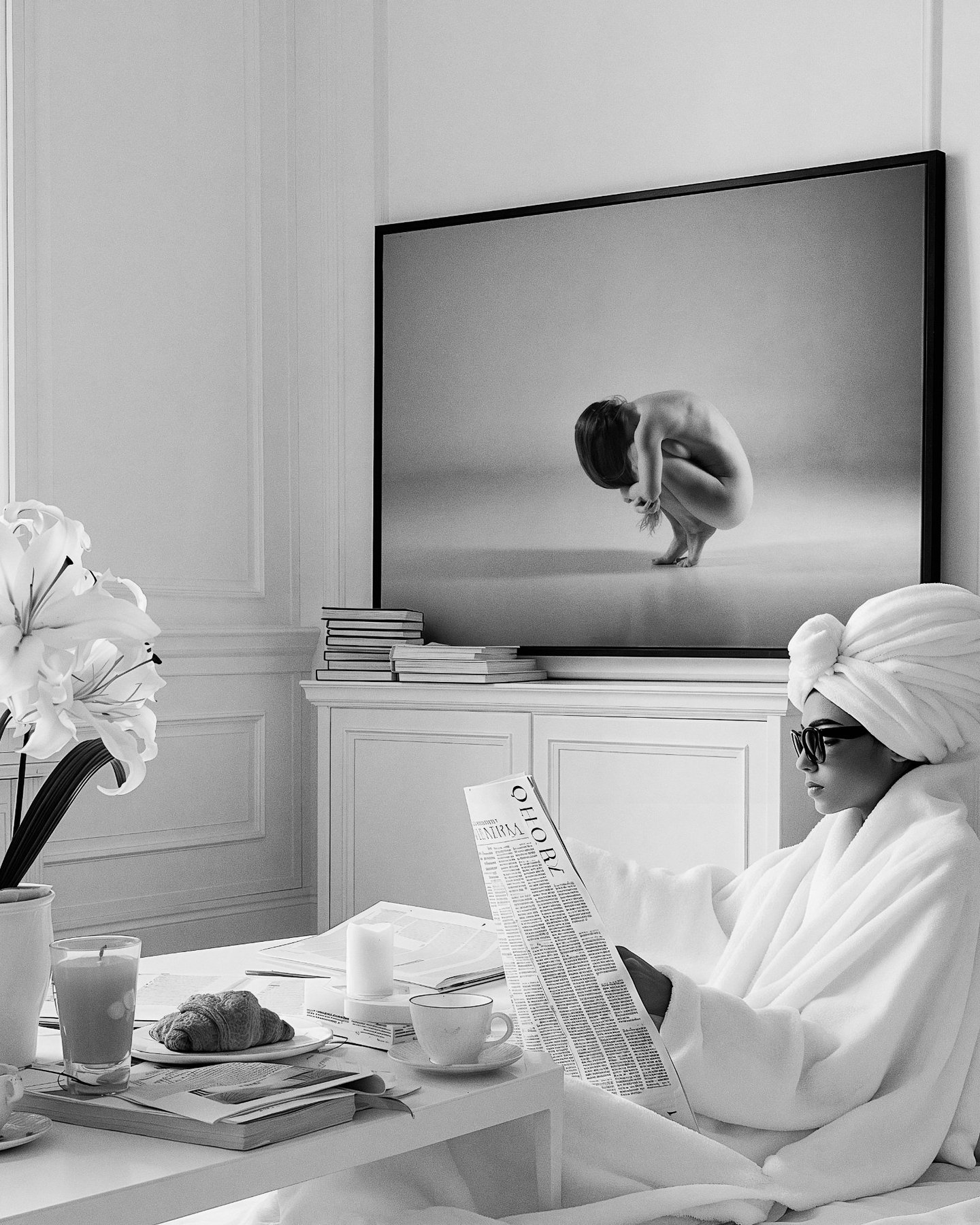
That's what I mean by changing a room. The photograph doesn't just occupy space. It generates atmosphere. A single image can make a room feel calmer, more considered, more intentional. It's doing something the room couldn't do on its own.
Choosing what holds you
The collectors I work with aren't usually looking for something that matches a color scheme. They're looking for an image that holds them. Something they'll notice differently on a Tuesday morning than they did on a Sunday night.
That's the nature of black and white. Without color to anchor your reading of the image, your eye finds new paths through it. The light shifts through the day. The print changes in morning sun versus evening lamplight. You get a piece of art that stays interesting because it never fully resolves.
If you've been considering a fine art photograph for your space: don't start with the wall. Start with the image that stops you. The room will organize itself around a piece that actually means something to you.
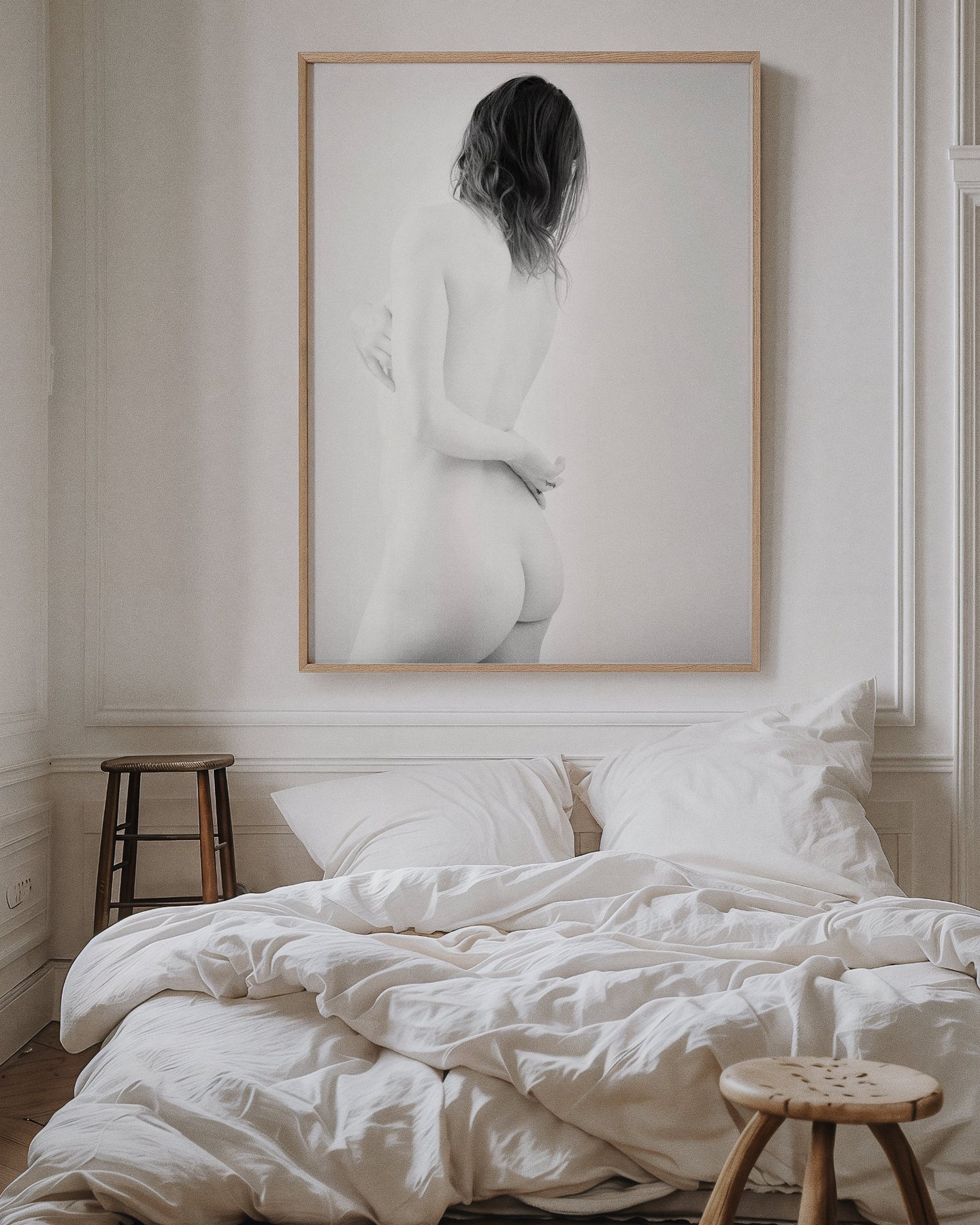
If you want to talk through sizing, framing, or how a specific print might work in your space, that's part of what I do. The conversation is where it starts.