The question I get most often is simple.
Why not color?
People ask it kindly, sometimes with curiosity, sometimes with confusion. Color is how we move through the world. Sunsets, city lights, red dresses, blue oceans. Why would you give that up on purpose?
The short answer is this:
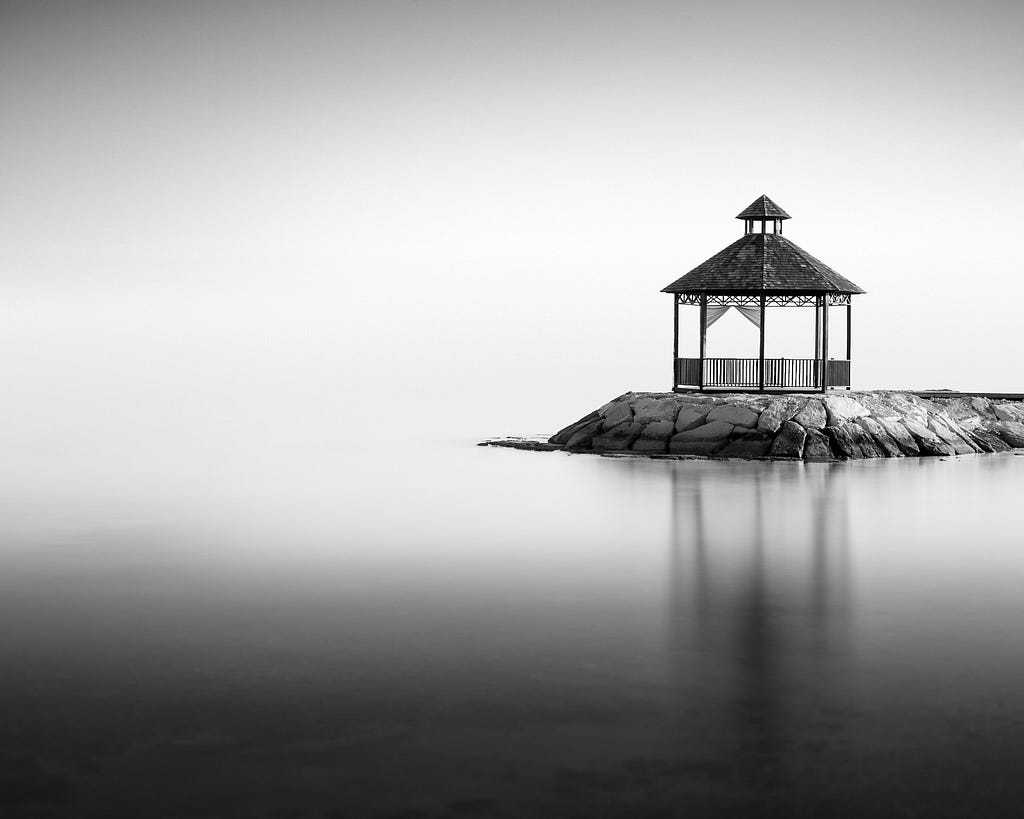
I work in black and white because it forces you to see what is actually there.
Not the decoration.
Not the distraction.
The truth underneath.
What Color Does To An Image
Color is beautiful. I am not interested in pretending otherwise.
But color is also very loud.
A red dress.
A bright blue wall.
The neon of a sign in the corner of the frame.
Your eye goes there first. It cannot help it. Color pulls focus before anything else has a chance to speak.
Most people never notice how much of their attention is being stolen by hue. They feel something from an image and assume it is the subject. Often it is just the palette.
When I remove color, I remove that first layer of noise.
What is left is quieter and far more demanding.
Light.
Shadow.
Form.
Emotion.
You cannot hide behind a pretty color in black and white photography. The image has to stand on structure and feeling.
That is why black and white is not a nostalgic choice for me. It is a discipline.
What Black And White Reveals
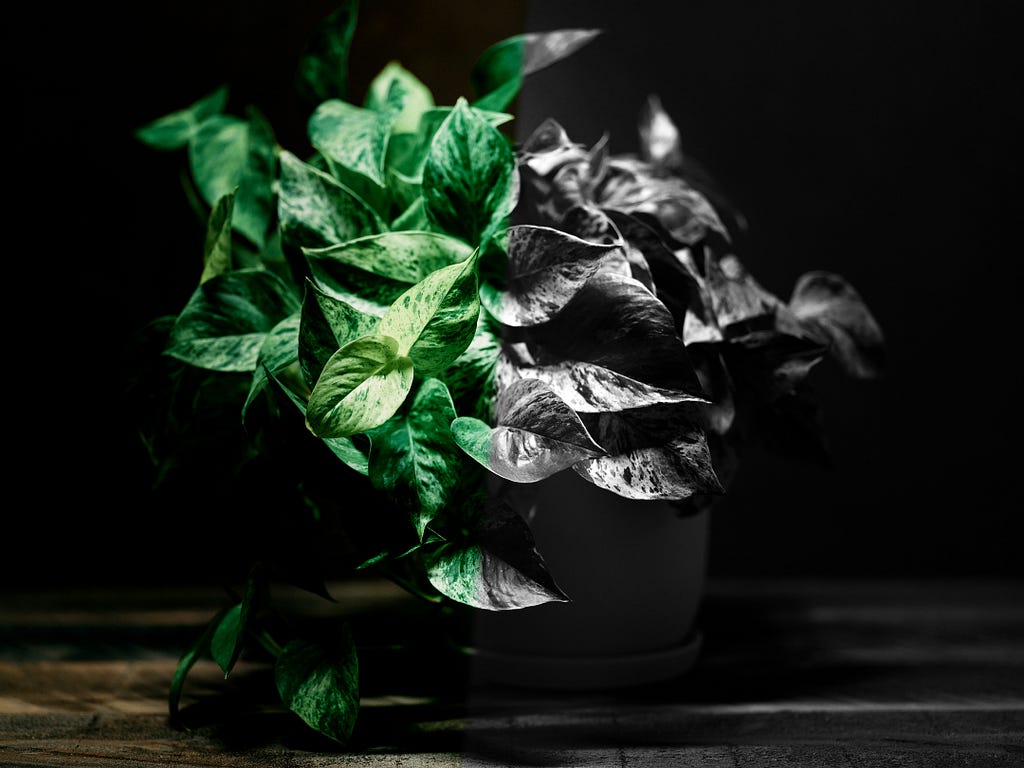
Strip an image down to tones, and you start to see the architecture of things.
The architecture of a face.
The way light sits on the ridge of a nose or the curve of a cheek.
The way a jawline becomes a line of shadow against a darker background.
You notice how light carves space. How it separates subject from environment. How it can make a room feel small and intimate, or wide and endless, without a single color shift.
Mood becomes clearer too.d
In color, a scene can feel “happy” or “sad” because we associate certain palettes with certain feelings. In black and white, mood has to travel through expression, gesture, contrast, and depth.
You cannot fake that with a filter.
This is why black and white portrait photography has always drawn me in. A good monochrome portrait does not ask, “Do you like her dress?” It asks, “Do you feel her presence?”
For collectors, the same thing happens.
A fine art black and white print in a space does not scream for attention. It does not clash with the furniture or the wall color. It sits there, steady and quiet, and slowly rearranges the way the room feels.
You start to feel the stillness in the frame.
You start to notice the rhythm of shapes and light.
You start to feel something you cannot easily put into words.
That is the work I am interested in.
How I See When I Work
At some point, I stopped thinking in color.
When I walk into a location now, I do not ask, “What color is the wall?”
I ask, “Where is the light coming from, and what is it doing to the surface?”
When I look at a person, I am not imagining their dress in red or blue. I am reading how the light moves across fabric and skin. Where it falls off. Where it needs to be softened or sharpened.
I see in contrast.
Lines. Planes. Negative space.
The relationship between the brightest highlight and the deepest shadow.
Whether I am out in the landscape or in the studio with a client, I am already picturing the final image without color. I am asking if this will still feel true once everything extra is gone.
If the answer is no, I do not take the frame.
Why This Matters For Portraits
A lot of people assume that color is what makes a portrait feel alive.
The tone of skin. The shade of lipstick. The color of eyes. The dress that makes you feel safe in your own body.
All of that can be beautiful. None of it is required for you to feel powerful in an image.
What you actually need is light that sees you.
Light that supports the structure of your face instead of fighting it.
Light that honors your age and your experience instead of trying to erase it.
Light that lets you occupy the frame without apology.
In a black and white portrait, there is nowhere to hide and nowhere to be reduced to a single feature. You become a whole presence.
For many clients, especially women who have spent years in harsh or careless light, this is a very quiet kind of healing. The absence of color pulls attention away from comparison and toward essence.
You are not “the one in the red dress.”
You are not “the one who looks tired.”
You are simply you.
Lit with intention.
Seen clearly.
Why This Matters For Fine Art
Minimalism is often mistaken for lack.
Not much in the frame. Not much going on. Very simple. Very bare.
That is not how I think about it.
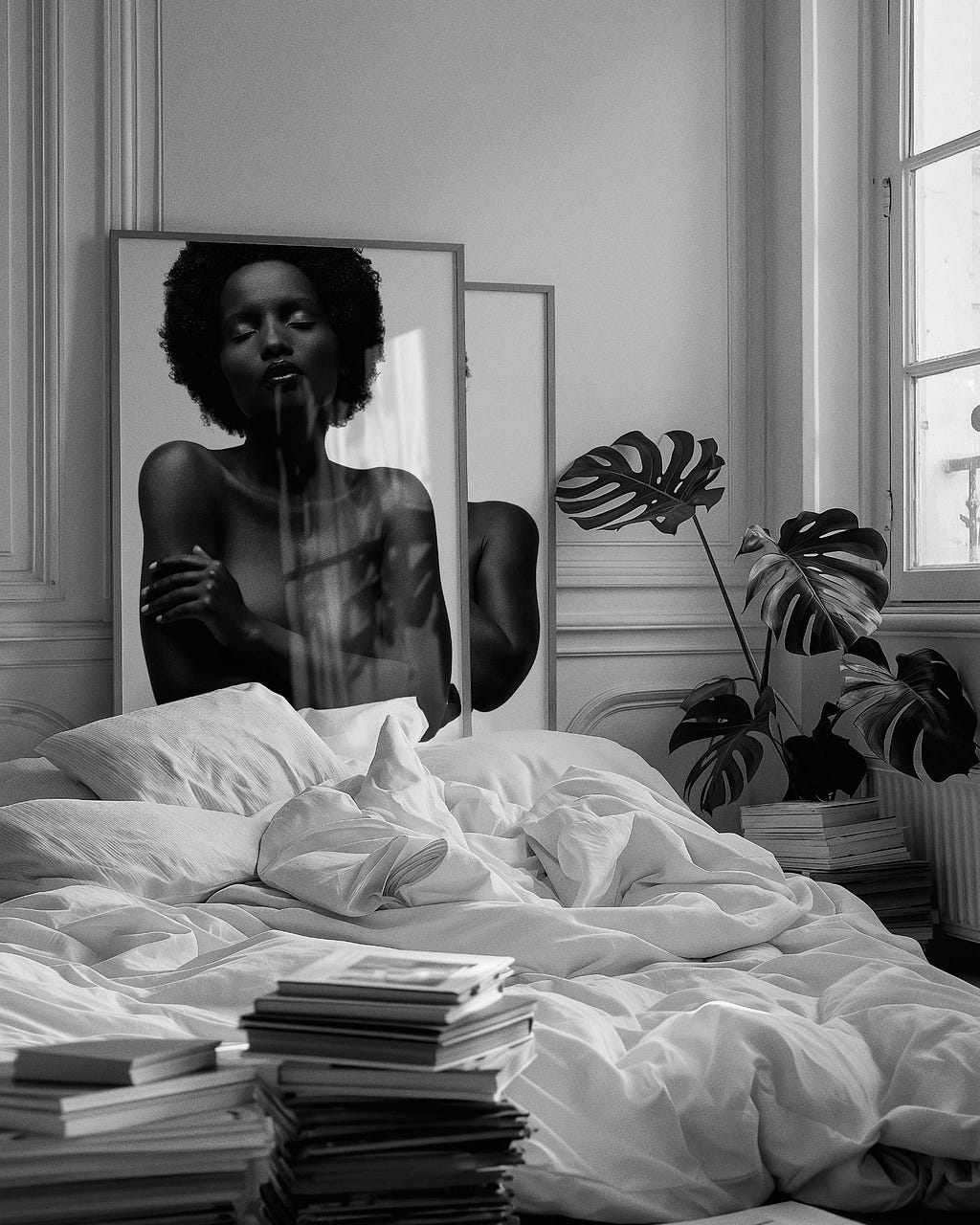
Minimalism, for me, is not about what is missing. It is about what remains when you remove everything that is not necessary.
A strip of shoreline.
One figure in a wide field.
A staircase disappearing into shadow.
In color, these scenes might look romantic or dramatic. In black and white, they are distilled into pure relationships.
Dark against light.
Stillness against movement.
Solitude against space.
Fine art black and white prints rely on this reduction. The image has to hold your attention without the usual tricks. It has to be strong in silence.
That is also why these prints tend to live well over time. You do not tire of them as quickly, because they are not asking for flashy attention. They are asking for something deeper from you.
Why cut yourself off from an entire dimension of the medium?
The reality is the opposite.
Black and white is not a cage. It is a lens I use to decide what deserves to be photographed in the first place.
If a scene only works because of the color, it is probably not my picture to make.
If a portrait only feels alive because of a dress or a background, I have not gone far enough.
When I commit to a monochrome world, I am committing to images that can stand on their own.
So when people ask me why black and white photography, this is what I mean:
I choose black and white because it tells the truth more clearly for the kind of work I want to make. It reveals structure, mood, and presence without distractions. It asks more of me. It asks more of the image. It asks more of you.
Color will always be there in real life.
In the work, I want something quieter and closer to the bone.
Black and white is not a limitation.
It is the way I listen.
And it is the only way I trust myself to answer.