Jan Scholz is one of my favorite portrait photographers alive. If you have never seen his work, go look. Jan Scholz's website. Do it now. I will wait.
What makes his portraits land is emotion. His technique is exceptional, but that is not what does it. His images carry a weight that sits somewhere between intimacy and solitude. The light is deliberate. The expressions are unguarded. You feel like you walked into a room where something quiet and real was happening, and nobody noticed you there.
He shoots film. Tri-X, medium format, large format. There is a tactile quality to his work that digital rarely touches. The grain is not a filter. The tones are not a preset. Everything about how his images are rendered stems from a specific relationship among the photographer, the subject, and the medium itself.
So when Scholz recently posted a set of AI-generated portraits on his Patreon, images made entirely with generative tools in his own visual style, it stopped me cold.
The images were good. What stopped me was that they were recognizably him.
The quiet admission
What struck me most was not the images themselves. It was his honesty about the process.
Scholz admitted he never thought he would do this. He did not frame it as the future of photography or a creative revolution. He framed it as an experiment. One that surprised him in what it could produce and what it could not.
That resonated. Because I have been sitting with the same question.
If you follow my work, you know where I stand on photography and AI. I wrote about it in AI and Fine Art Photography. What makes a photograph a photograph is contact with the world. Light from something real, passing through a lens, recorded on film or sensor. That chain of events is the medium. Break the chain and you are making something else. Not better or worse. Just different.
I still believe that.
But Scholz's experiment pushed me past the theoretical and into something more personal: what happens when AI can replicate your specific eye?
I tried it myself
I have been developing a new series called Void. The work is still forming. Not yet fully published. Still in that stage where the ideas are sharper than the final images. I know what I want the series to feel like. I know the emotional register. I know the tonal range. I know the relationship between figure and negative space that I am after.
So I did what Scholz did. I used AI to generate concept images for Void. Not as finished work. As visualization tools. I fed the machine my aesthetic language and asked it to show me what it understood.
The results were unsettling. And useful.
Some of the generated images captured the mood I was after with uncomfortable accuracy. The tonality was close. The spatial relationships were close. The emotional temperature was close. I used several of these AI-generated concepts when working with my muse for the series. Not as images to replicate. As a shared visual vocabulary. A way to say this is the feeling without fumbling through verbal descriptions that never quite land.
It worked. As a communication tool between photographer and subject, generative AI did something I did not expect it to do well. It collapsed the distance between an idea in my head and an image my collaborator could see and respond to.
But here is the part that kept me up at night.
The uncomfortable question
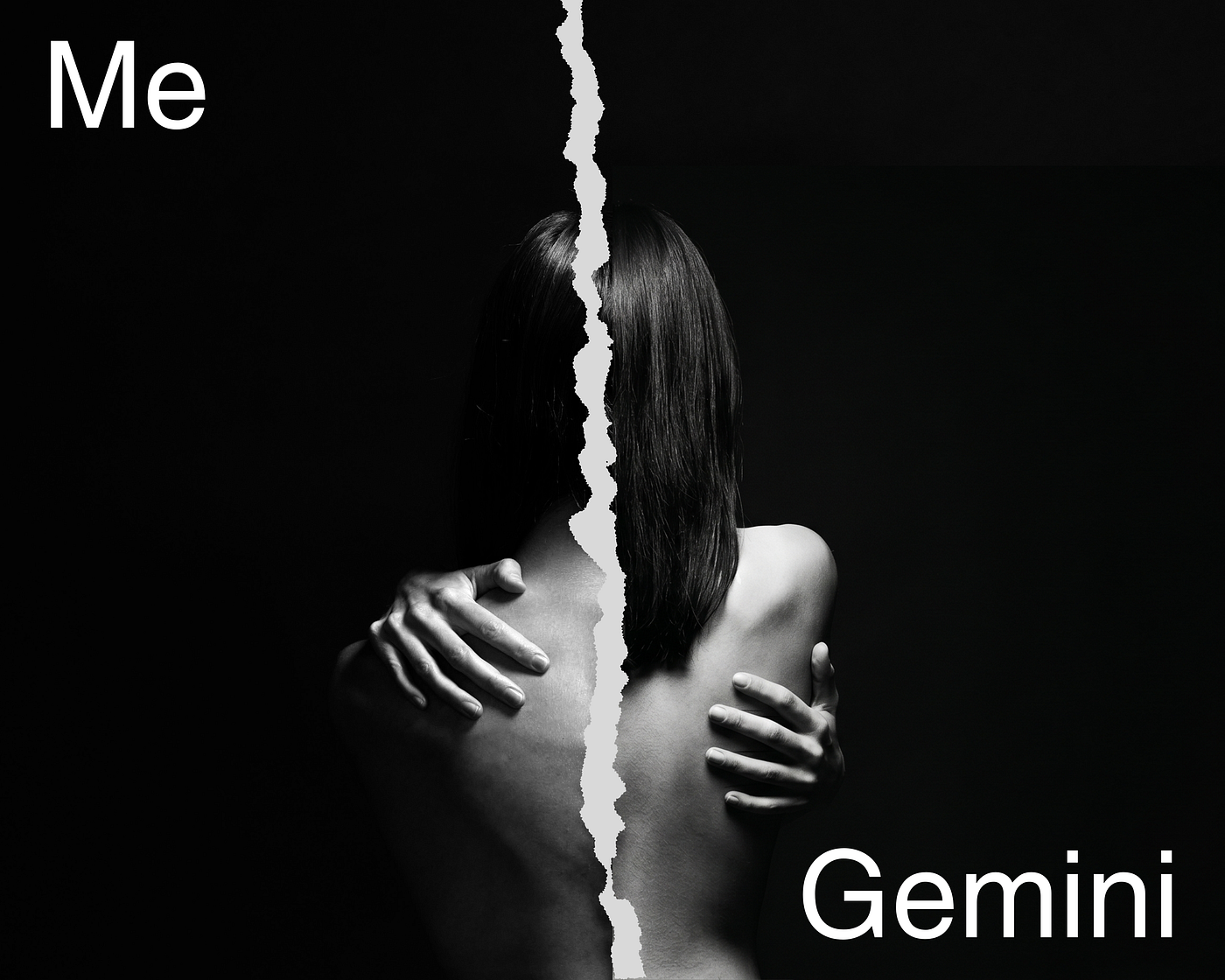
If AI can generate images that look like my work, that carry my tonal signature, my compositional instincts, my emotional sensibility, what exactly is the value of me making the photograph?
This is not a hypothetical. I have the images. They exist. They look like my work. Not perfectly, not with the full depth or the accidents that happen when real light meets real skin in real space. But close enough to make you pause.
The honest answer is that this question only feels threatening if you think the value of a photograph lives entirely in how it looks.
It does not.
What AI cannot replicate
A generated image has no memory.
When I photograph someone for Void, there is a conversation happening. Sometimes spoken, sometimes not. There is a negotiation between what I see and what the subject reveals. There is a moment where the person in front of my camera stops performing and starts existing. I am watching for that moment. The image is built around it.
AI does not watch for anything. It predicts. It synthesizes a plausible arrangement of visual information based on patterns. It can approximate the look of an intimate moment. It cannot experience one.
That difference is invisible in a JPEG. It is not invisible in the room where the image was made. And it is not invisible to the person in the photograph.
The subject in an AI-generated portrait does not exist. No one was seen. No one was held in someone's attention for the duration of an exposure. The image is a hallucination with good taste.
Painters feared photographers. Photographers fear AI.
When photography emerged in the 1800s, painters were convinced the medium would destroy their craft. Why would anyone commission a portrait when a machine could produce a likeness in minutes?
They were right about the disruption. They were wrong about the extinction.
Photography did not kill painting. It liberated it. Once painting no longer had to serve the function of documentation, it was free to become something else entirely. Impressionism, expressionism, abstraction. These movements exist partly because photography took the burden of representation off the canvas.
We are in the same moment now. Photographers are looking at generative AI the way Delacroix looked at the daguerreotype. Fascination and existential dread, in equal measure.
But the pattern is the same. AI will not replace photography any more than photography replaced painting. What it will do is clarify what photography actually is when you strip away the parts that a machine can simulate.
And what remains is the encounter.
The photographer in the room. The subject choosing to be seen. The light as it actually was, not as an algorithm predicts it should be. The tenth frame where something shifts and the image becomes real.
Three mediums, three relationships to the world
Here is where I have landed after sitting with this for months.
Painting is invention. The painter builds a world from nothing. Every mark is a decision. The canvas holds no obligation to what exists outside the studio. This is its power and its freedom.
Photography is witness. The photographer does not invent the scene. They encounter it. They choose the frame, the moment, the interpretation. But the raw material is the world as it is. This is its weight and its authority.
AI image generation is synthesis. The machine assembles a plausible image from patterns it has learned. It can mimic witness. It can mimic invention. But it is doing neither. It is predicting what an image should look like based on what images have looked like before.
None of these are lesser. They are different relationships between the maker and the image.
There are people who value painters. Who want a human hand building a world from imagination and skill. There are people who value photographers. Who want the knowledge that a real person stood in front of a real scene and made a choice about what to preserve. And there will be people who value AI-generated work for what it is: the creation of new visual worlds unconstrained by physics, logistics, or the cooperation of reality.
The equilibrium is coming. It always does.
What I took from Scholz's experiment
Watching a photographer I admire cross into AI generation, with self-awareness, without pretending it was the same as his photographic work, gave me permission to stop treating generative tools as the enemy.
They are not the enemy. They are a new instrument in a growing orchestra.
I still pick up my camera. I still load film. I still stand in front of real people and real landscapes and wait for the light to do something I did not expect. That is the work. That is where the images live.
But when I need to show my muse what the next frame should feel like before I make it, I have a new tool for that. When I need to test whether a visual idea has legs before I commit a sheet of 4x5 film to it, I have a faster way to sketch.
The camera is not threatened by the prompt. The darkroom is not obsolete because of the GPU.
What changes is that photographers can no longer hide behind the assumption that the look of their work is the work itself. The look can be synthesized now. The encounter cannot.
If your photographs are only as valuable as their visual appearance, AI has a problem for you.
If your photographs carry something that was only possible because you were there, present, watching, responding, then the medium holds.
It holds.